Small businesses rarely lose sales because of the product. They lose them because a competing page loaded faster, answered the question more clearly, or simply showed up first. Search remains one of the few channels where a buyer arrives already holding a need, which makes visibility there far more valuable than interrupting people on a social feed.
The difficulty is that results pages have grown crowded. Google now mixes classic blue links with local packs, shopping listings, video results, and AI-generated overviews. A small team that publishes pages without a plan tends to fall between all of them. Titles read like internal labels, pages target phrases nobody actually types, and product descriptions repeat the manufacturer’s wording, which gives Google little reason to prefer them.
Professional help closes that gap. The goal is not to trick an algorithm. Google’s own guidance keeps returning to the same idea: helpful, reliable, people-first content on a site that is easy to crawl, fast, and trustworthy. Good SEO is the practice of meeting that standard and then making it readable to the search engine.
What SEO Services for Small Businesses Actually Include
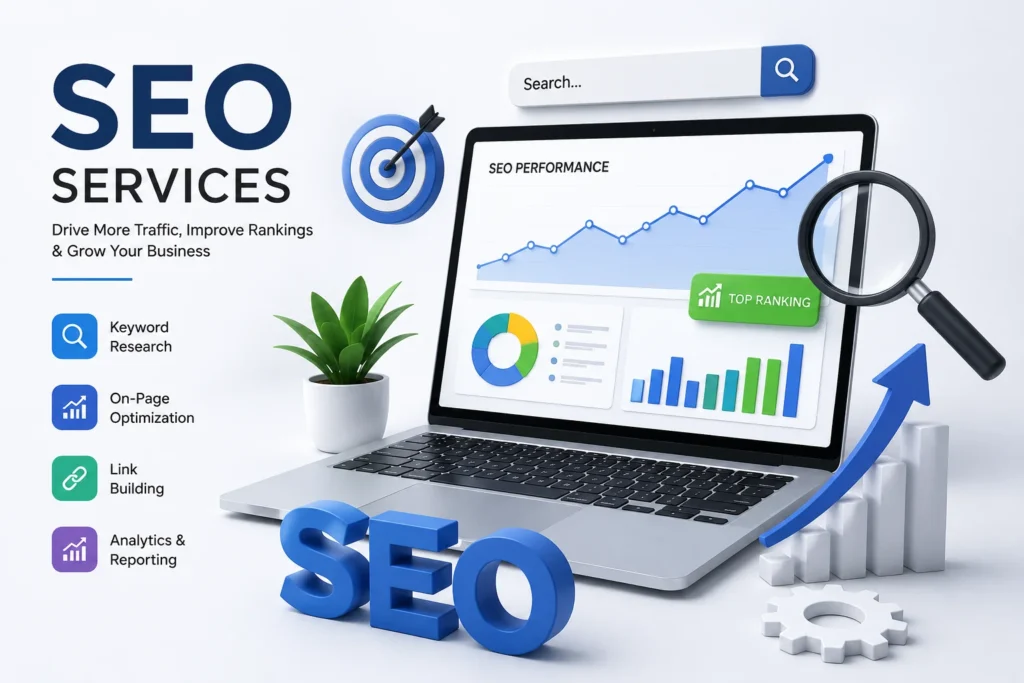
The phrase sounds vague, so it helps to break it into parts. A reasonable engagement from a provider offering SEO services covers five areas, and each one solves a different problem.
Technical Foundations Come First
Nothing else works if Google cannot crawl and index the right pages. A technical review looks for blocked pages, broken links, duplicate URLs, missing sitemaps, and slow templates. Core Web Vitals matter here, especially loading speed, layout stability, and how quickly a page responds to taps and clicks. Mobile-first indexing also means Google mainly uses the mobile version of a page, so a design that only looks polished on a desktop is not enough. For a store with many product variations, such as one part sold in a dozen anodized colors, technical cleanup also keeps near-identical pages from competing with each other.
Keyword Research Built Around Buying Intent
Keyword research is less about volume and more about intent. Someone searching “what is a chain tensioner” wants to learn. Someone searching “chain tensioner for 14mm axle” is close to paying. A solid strategy maps each type of phrase to the right page: guides for questions, category pages for comparisons, and product or service pages for purchase-ready searches. Chasing broad, high-volume terms is usually a poor use of a small budget, because the sites already ranking for them have years of head start.
On-Page Optimization That Reads Naturally
On-page work covers title tags, headings, internal links, image alt text, and the copy itself. Titles should describe the page honestly. Meta descriptions do not directly influence rankings, but a clear one can improve the odds of a click. Headings should follow the way a reader thinks, not a list of target phrases. The details of this layer are explained on the dedicated on-page SEO page.
Content Written for People First
Google has been consistent that content produced mainly to attract search traffic, rather than to help someone, is a liability. For small businesses, the strongest content is usually what only they can write: fitting guides, maintenance advice, comparison notes, and lessons from real jobs. First-hand experience is a quality signal that mass-produced articles cannot fake. Teams short on time often bring in professional content writing to keep that publishing steady without losing the business’s own voice.
Authority, Reviews, and Local Signals
Links and mentions from relevant, trusted sources still count, but quality beats quantity. Paid link schemes and bulk guest posts on unrelated sites can run into Google’s spam policies and do more harm than good. For businesses that serve a local area, a complete Google Business Profile, consistent contact details across directories, and a steady flow of genuine reviews carry real weight.
How SEO Works Alongside Google Ads Management Services
Organic search is slow by design, and many small businesses cannot wait months for traffic. That is where paid search fits. Google PPC services bring clicks quickly, while SEO builds visibility that keeps working after the ad budget is spent. The two also share useful data. Search terms from paid campaigns reveal how customers phrase their needs, which feeds straight back into keyword research.
Business owners weighing the paid side can read how Google Ads management services improve PPC performance and then review the Google PPC services page for scope. Handled together, Google PPC management and SEO stop competing for the same budget and start covering different stages of the buying path. A paid campaign can test which product phrases convert, and the winners become organic content priorities.
Choosing How to Get SEO Done
Three routes are common, and none is right for everyone.
| Option | Best fit | Main limitation |
|---|---|---|
| In-house | Owners with time to learn and a simple site | Slow learning curve; technical issues are easy to miss |
| Freelance specialist | Focused tasks like audits or content batches | Limited capacity across technical, content, and link work |
| SEO agency | Businesses needing a coordinated strategy | Higher cost; needs careful vetting for transparency |
Doing SEO in-house can work for a simple site and an owner willing to learn, though technical problems are easy to miss. A freelancer suits focused tasks like an audit or a content batch. An agency makes sense when technical work, content, and authority building need to move together. Budget-conscious readers can see how affordable SEO services improve online visibility before committing, and a wider view of affordable digital marketing services shows where SEO sits among other options.
What to Ask Before Hiring an SEO Provider
Questions Worth Asking
A short list of questions separates serious providers from vague ones. What does the initial audit cover? Who writes the content, and who reviews it for accuracy? How are links earned rather than bought? Which metrics appear in reports, and will the business own its Search Console and analytics accounts? Is the contract month-to-month, or locked in for a year?
Site quality matters too. A slow or poorly built template caps what any optimization can achieve, which is why some projects begin with web development before the SEO work starts.
Red Flags That Signal Trouble
Guaranteed first-place rankings are the clearest warning. Nobody outside Google controls its results, and Google itself cautions against providers who promise otherwise. Secret methods, bulk directory submissions, refusal to share account access, and reports that show activity without outcomes deserve the same suspicion. A trustworthy provider explains the work in plain language and ties it to business goals. Teams such as Genzy Link Pro position their process around that kind of transparency, starting with an audit and ending with measured performance.
How Long Results Take and How to Track Them
Timelines depend on competition, site age, and the starting condition of the website. Technical fixes may show up in crawl and indexing reports within weeks, while ranking gains for competitive phrases commonly take months. Anyone promising a fixed date is guessing.
Google Search Console is the best free source for tracking progress. It shows impressions, clicks, average position, and the actual queries bringing visitors. Rising impressions with flat clicks, for example, usually point to weak titles or rankings sitting too low to earn attention. Analytics then connects visits to outcomes such as calls, form submissions, and orders. Traffic alone proves little if nobody buys.
Conclusion
Search visibility is not a luxury reserved for large brands. For small businesses, it is often the most direct path from a stranger’s question to a paying customer. The work itself is unglamorous: a crawlable site, pages matched to real intent, honest content, and steady measurement. Whether a store sells machined BMX parts or a local service, the pattern holds. Start with an audit, fix the foundations, publish what only the business can say, and judge progress by outcomes rather than promises. Done patiently, SEO becomes an asset that keeps working long after any single campaign ends.
Ready to Be Found by Local Customers?
Get a clear SEO plan built around how your buyers search.
Frequently Asked Questions
How much do SEO services for small businesses cost?
Costs vary by scope, competition, and provider. Retainers, audits, and project fees exist, so small businesses should compare deliverables and reporting instead of choosing on price alone.
How long does SEO take to work?
Technical fixes may appear in indexing reports within weeks, but ranking gains for competitive searches often take months. Providers promising exact dates or guaranteed positions are guessing.
Can a small business do SEO without an agency?
Yes, when the site is simple and the owner has time to learn. Larger stores or competitive markets need specialist help with audits, content, and link quality.
Is SEO or Google Ads better for a small business?
Neither wins. Google Ads brings fast paid clicks, while SEO builds lasting organic visibility. Many small businesses use both, letting paid search data guide organic keyword decisions.
Can anyone guarantee first-page rankings?
No. Only Google controls its results, and Google itself warns against providers who promise top positions. Honest services improve crawlability, content, and trust, then report measurable progress.